Tailoring Your Setup: Home Backup vs. Off-Grid Living
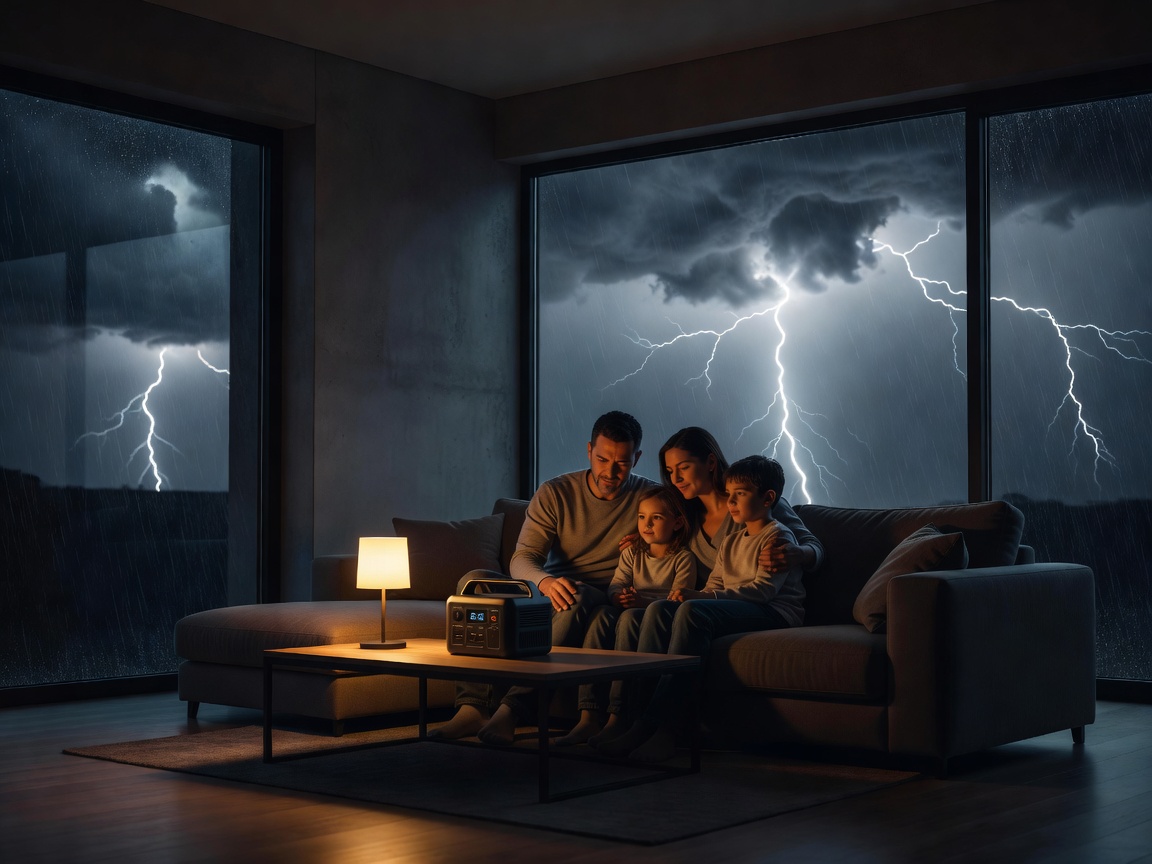
A portable power station is a versatile tool, but its effectiveness depends entirely on matching its specifications to your environment. A unit designed for ultra-light wilderness camping will fail to keep a home refrigerator running through a multi-day blackout, just as a massive home-backup unit is utterly impractical for a weekend fishing trip. Identifying your primary use case allows you to prioritize the correct features.
Scenario A: Emergency Home Backup
When the grid fails, your priorities shift toward massive capacity, high inverter limits, and seamless integration with your home electronics. Portability takes a back seat to raw power and reliability.
Key Features to Prioritize:
- EPS / UPS Functionality: An Emergency Power Supply (EPS) or Uninterruptible Power Supply (UPS) feature allows you to plug the station into the wall, and plug your essential appliance (like a fridge or medical device) into the station. Power bypasses the battery during normal operation, but seamlessly switches to battery power within 20-30 milliseconds if the grid drops, preventing your appliance from turning off.
- Expandability: Look for systems that allow you to daisy-chain extra battery modules. A 2000Wh base unit that can expand to 6000Wh gives you flexibility as your backup needs grow.
- LiFePO4 Chemistry: Because the unit will likely spend months plugged into the wall at 100% state of charge, the stable chemistry of LiFePO4 is vital to prevent rapid battery degradation.
Scenario B: Vanlife and Overlanding
In mobile living, space is at a premium, and the ability to recharge quickly from multiple sources is the most important factor. You are off-grid indefinitely, so the system must be self-sustaining.
Key Features to Prioritize:
- High Solar Input Limits: Van roofs offer limited real estate for solar panels. You need a station with an MPPT controller that accepts high voltage so you can wire panels in series and capture every drop of morning and evening sun.
- Alternator Charging: The ability to charge rapidly from your vehicle's 12V cigarette lighter port—or better yet, via a direct Anderson connection to the alternator—ensures your batteries top up while you drive between locations.
- Regulated 12V Outputs: If you run a portable 12V fridge, you need a regulated DC output. Unregulated ports drop in voltage as the battery drains, which can cause sensitive 12V fridges to shut off prematurely to protect their compressors.
Always verify that the 12V cigarette port on the power station outputs a constant 12.8V - 13.5V regardless of the battery's remaining percentage. This keeps 12V appliances running flawlessly down to 1%.
Scenario C: Weekend Camping & Tailgating
For casual outdoor use, convenience, weight, and build quality dominate the selection criteria. You are likely powering phones, laptops, LED lights, drones, and small portable speakers.
Key Features to Prioritize:
- Weight & Ergonomics: An NMC Lithium-ion battery may be preferable here for its lighter weight. Look for sturdy, integrated handles and a form factor that fits easily into a car boot.
- USB-C Power Delivery (PD): Avoid using the AC inverter to charge modern laptops or phones. Using a 100W USB-C port is significantly more efficient because it skips the DC-to-AC-to-DC conversion process.
- Ruggedness: Port covers to prevent dust ingress, rubberized corners for drop protection, and clear, bright LCD screens that are readable in direct sunlight.